John Carter rescues Dejah Thoris at the Thark council
A Princess of MarsJohn Carter rescues Dejah Thoris at the Thark council when a young warrior strikes her down as she pleads before the assembled chieftains. Carter crosses the hall before the blow can be followed by further abuse, defeats the attacker in single combat, and helps Dejah Thoris leave under his protection. The rescue reverses the council’s apparent verdict: the assembly does not punish Carter, and the warrior’s death brings him the rank and authority that make his intervention politically consequential.
Causes and Background
The council hears Dejah Thoris speak while she is a captive among the Tharks. Lorquas Ptomel and the other warriors sit silently after she finishes; Carter believes they have been moved, and imagines that a chieftain able to overcome inherited custom might begin a new era. Tars Tarkas rises to speak, his expression showing an inward struggle against custom and his own nature. For a moment, the scene offers the possibility that her appeal has reached the council.
That possibility is abruptly broken. A young warrior appears to sense the older men’s hesitation, comes down from the rostrum, strikes Dejah Thoris, and laughs at her as she lies on the floor. The attack exposes the limits of the council’s momentary sympathy: its members do not immediately challenge the assault, and their established moral code can treat cruelty toward a captive as a source of humor. The rescue begins when Carter responds to the endangered woman rather than accepting the assembly’s passivity.
Carter’s Intervention and the Duel
Carter says that he had already sensed what was coming. As he sees the attacker aim a blow at Dejah Thoris, he crouches to spring and crosses half the hall before the strike lands. The narrative’s brief description of the moment cannot be mistaken for hesitation: Carter explains that his written account takes longer than the action itself. His sudden movement makes protection immediate, not a decision reached after the council has settled into silence.
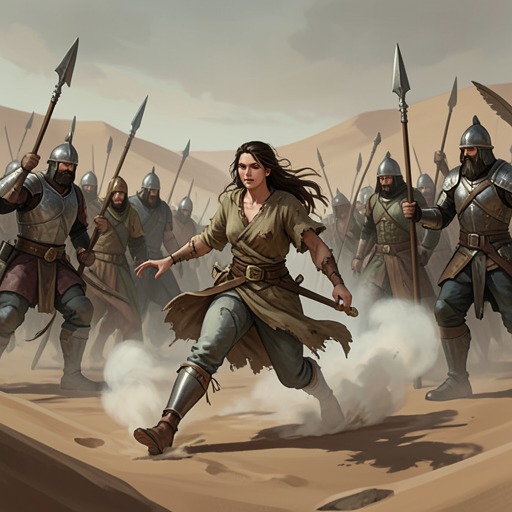
The warrior is twelve feet tall and heavily armed. Carter strikes him as he turns at a warning cry; when the warrior draws his short sword, Carter draws his own and leaps close, holding on to the warrior’s chest and tusk while continuing to fight. At that range, the larger warrior cannot use his sword effectively or draw his pistol. The encounter is governed not only by physical advantage but by Thark custom, which restricts a warrior in private combat to the weapon used to attack him. Although the attacker attempts to draw a pistol, that choice does not give him an effective way to dislodge Carter. The fight ends quickly with the warrior dead.
Carter’s violence is directed at stopping the assault, and its consequence is immediate: the council’s attempted degradation of Dejah Thoris becomes a contest that Carter wins. The assembled warriors do not intervene against him. Once he has regained his feet, he raises Dejah Thoris and carries her to a bench, shifting from combat to care. He tears silk from his cape to staunch the blood from her nose; her injury proves slight, and she soon speaks to him.
Recognition and Consequences
Dejah Thoris asks why Carter has risked his life for her after refusing even friendly recognition during her first hour of peril. She cannot reconcile his earlier distance with his willingness to kill one of his companions on her behalf, and asks what kind of man he is. Her question identifies the rescue’s personal reversal: Carter, whom she had taken for a hostile or indifferent fellow captive, has acted as her defender.
Before Carter can fully answer her, a warrior approaches bearing arms, equipment, and ornaments taken from the dead man. The trophies clarify why Carter had been allowed to wear arms and the regalia of a Tharkian chieftain. He had not understood that his earlier blow in the audience chamber had killed his opponent; now the new trophies make the pattern plain. Under the Tharks’ rough customary justice, he has acquired the position and possessions of the man he defeated. His chieftaincy is therefore not a title granted after a deliberation: it follows from combat and is recognized through the dead warrior’s equipment.
That recognition changes the balance in the chamber. Carter understands that the respect and freedom he has received, including his unusual tolerance in the audience chamber, derive from his status as a chieftain. When Tars Tarkas remarks on how readily Carter now speaks the language of Barsoom, Carter answers him; the exchange underscores that Carter has moved from a stranger unable to communicate to a warrior whom the Tharks recognize as one of their own by rank, even though he remains a prisoner by circumstance.
Departure and Significance
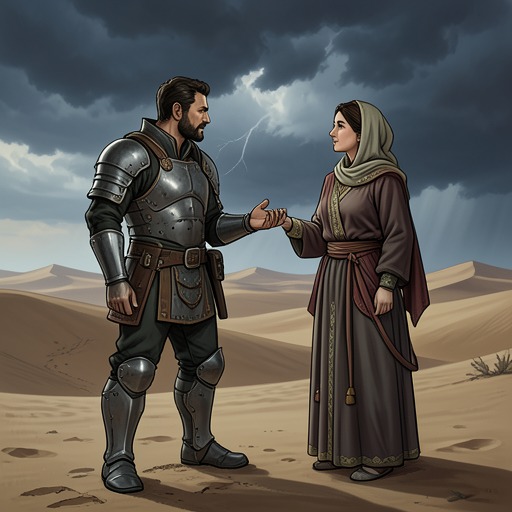
Carter turns back to Dejah Thoris, helps her to her feet, and starts for the exit. He ignores the guardians hovering around her and the chieftains’ questioning looks, reasoning that his new standing makes him responsible for acting as a chieftain should. Neither the guardians nor the council stops them. Dejah Thoris, Princess of Helium, leaves beside Carter, followed by the faithful Woola, while the chamber remains silent.
The rescue’s decisive change is thus both intimate and political. Carter intervenes because Dejah Thoris is under attack, but the result also reveals how Thark authority works: victory grants the defeated warrior’s rank and possessions, and that acquired status gives Carter room to act. The scene places a protective response to vulnerability inside a society that publicly recognizes power through combat. Carter does not overturn the Tharks’ customs; he uses their rules and the authority won through them to carry Dejah Thoris out of the council chamber. The sequence closes not with a council’s formal judgment, but with the pair’s unobstructed departure and the silence of those who have accepted Carter’s standing.